Turning Ideas into Digital Reality.
In Linux, redirection is used to control where the input and output of a command go (file, screen, or another command).
>
>>
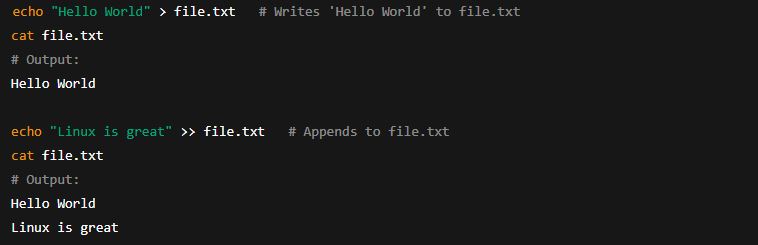
> : Redirects output to a file (overwrites).
>> : Redirects output to a file (appends).
Example:
<
Takes input for a command from a file instead of keyboard.
2>
2>>
Redirects error messages to a file.
&>
> file 2>&1
Redirects both stdout and stderr to the same file.
<<
Redirects a block of text to a command.
<<<
Redirects a single string as input.
|
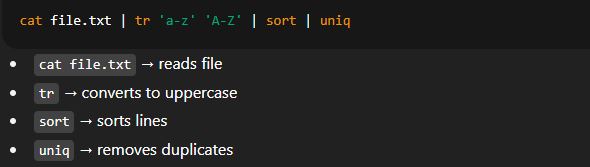
A pipe (|) sends the output of one command as input to another command.
Your email address will not be published. Required fields are marked *
Comment *
Name *
Email *
Website
Save my name, email, and website in this browser for the next time I comment.